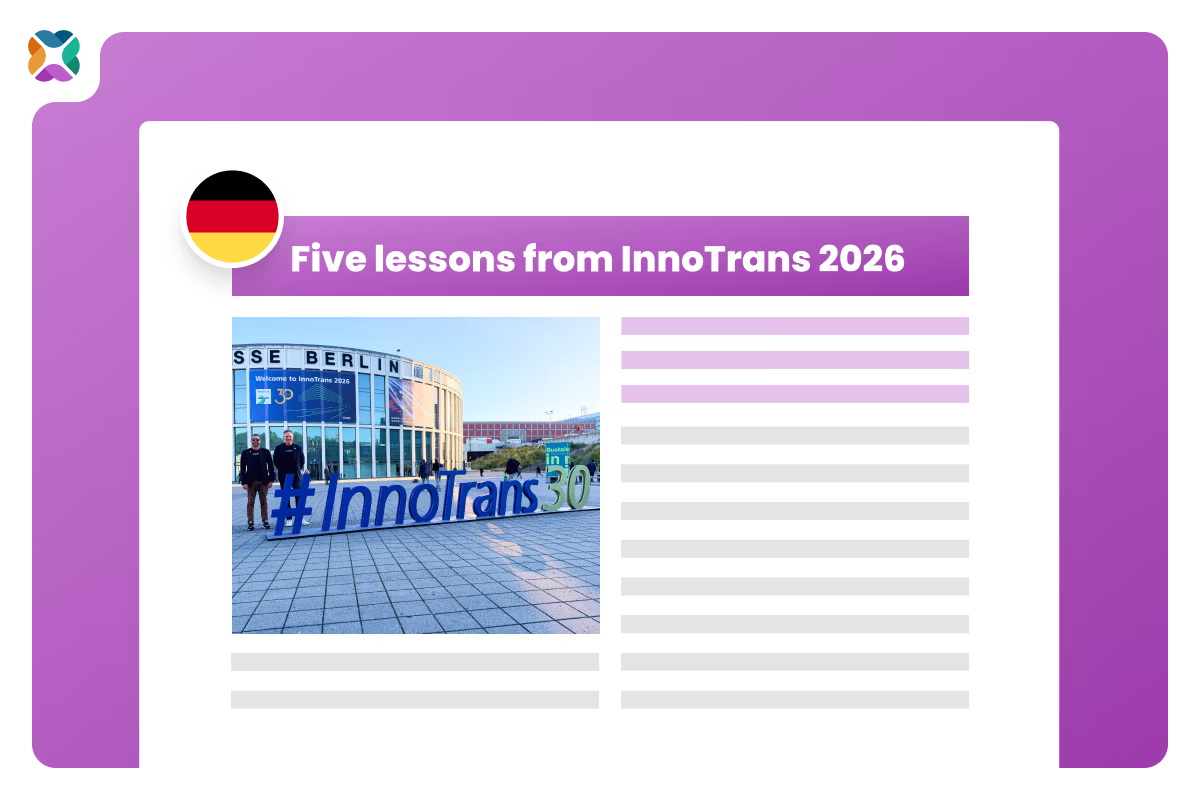
We believe excellent public transport is one of the most powerful forces we have to decongest and decarbonise our cities. InnoTrans was a reminder that this belief is widely shared. Our industry is also naturally collaborative, but collaboration only works when you know how you're really performing, who your true peers are, and where to focus to improve.
This transparency was the thread running through my talk in Berlin. Here are five lessons I took away, from the data we shared and the conversations it sparked.
1. You don't need to be big to be brilliant
The Global Public Transit Index (GPTI) from Mosaiq by Snapper Services covers more than 1,500 locations around the world, is updated daily, and is freely available to anyone. One of the most striking things it shows is that eight of the top 10 countries have populations around 10 million or fewer.
Scale and resources help, but they aren't what separates excellent networks from the rest. That should be encouraging for every operator and authority, whatever their size.
2. Consistency is its own kind of excellence
Finland stands out in the GPTI – first of 23 countries – not just because its network performs well, but because it performs well consistently. Passengers build their lives around a network they can rely on day after day. A great month is good news; a great year, every year, is what earns trust.
3. Your best peers might not look like you
It's natural to benchmark against cities of a similar size or in the same country. But some of the most useful comparisons come from unexpected pairings. Stuttgart and Budapest differ in size and even in how they define "on time", yet placing them side by side quickly shows where one could learn from the other.
Take early departures. Around 14% of trips in Stuttgart leave early, compared with just 0.6% in Budapest. That's a clear opportunity for Stuttgart to learn from Budapest's approach if they want to improve this metric.
The GPTI makes it easier than ever to find these peers and start a conversation. Curiosity is the first step.
4. Even the best networks can get better
If the GPTI is about curiosity, our transit intelligence platform, Mosaiq Insights, is about understanding why. We designed Insights to be fast and easy to use, and with our new AI assistant we've made it easier still.
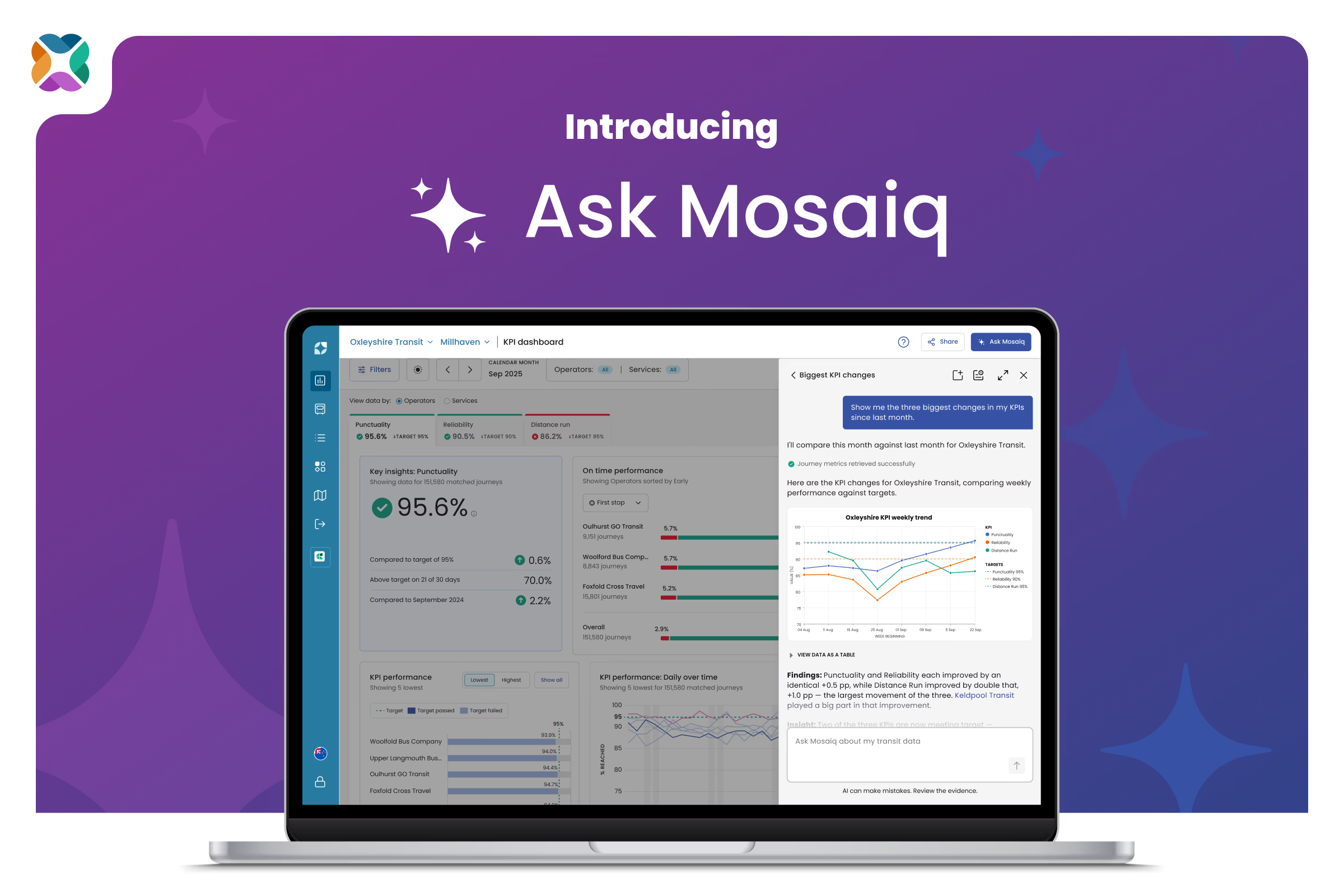
Most public transport teams don't have too little data. They have too much, and not enough time to find what it's telling them. Ask Mosaiq is an AI assistant built into Mosaiq Insights that closes that gap. You ask a question in plain language and get a specific answer, backed by interactive charts and, where relevant, context such as weather. Unlike general AI tools, every answer is grounded in your own network data, and the evidence is always on show.
Ask Mosaiq highlights what's worth a closer look, but it never decides for you. The judgement stays with the people who know the network best. To show what this looks like in practice, we used Ask Mosaiq live on stage on Budapest's network, one of the best performing in the world. We started with a simple question: which Centre for Budapest Transport (BKK) services are contributing most to poor performance?
Ask Mosaiq worked through the data quickly and systematically. It ruled out services with low-quality data, so we weren't chasing false signals, and identified the Route 14 tram as a prime opportunity to focus on. We then explored further, generating options that included an assessment of how the network coped when snow and ice hit in January 2026.
Even at the top of the index, there is room to improve. The trick is finding it quickly.
5. Speed only matters if you can trust and communicate the answer
What makes this kind of analysis useful wasn't just that it took under 10 minutes. It was that every step of Ask Mosaiq's work was visible. The result wasn't a black box answer but a set of defensible options, backed by evidence, that you could question and explain to others.
And because we wanted to hypothetically share those options with a planner who doesn't speak English, we generated them in Hungarian. Good insight shouldn't stop at a language barrier.
Better decisions, faster
Public transport professionals are some of the most dedicated people I know, and some of the most time-poor. Every hour spent wrangling data is an hour not spent improving services for passengers.
Putting Ask Mosaiq in their hands means better-quality decisions, made faster. Better decisions mean better public transport, and better public transport is how we decongest and decarbonise our cities.
Thank you to everyone who joined us in Berlin. If you missed it, you can access Mosaiq by Snapper Services for free. I'd love to hear what you discover about your network, and who you find to learn from.