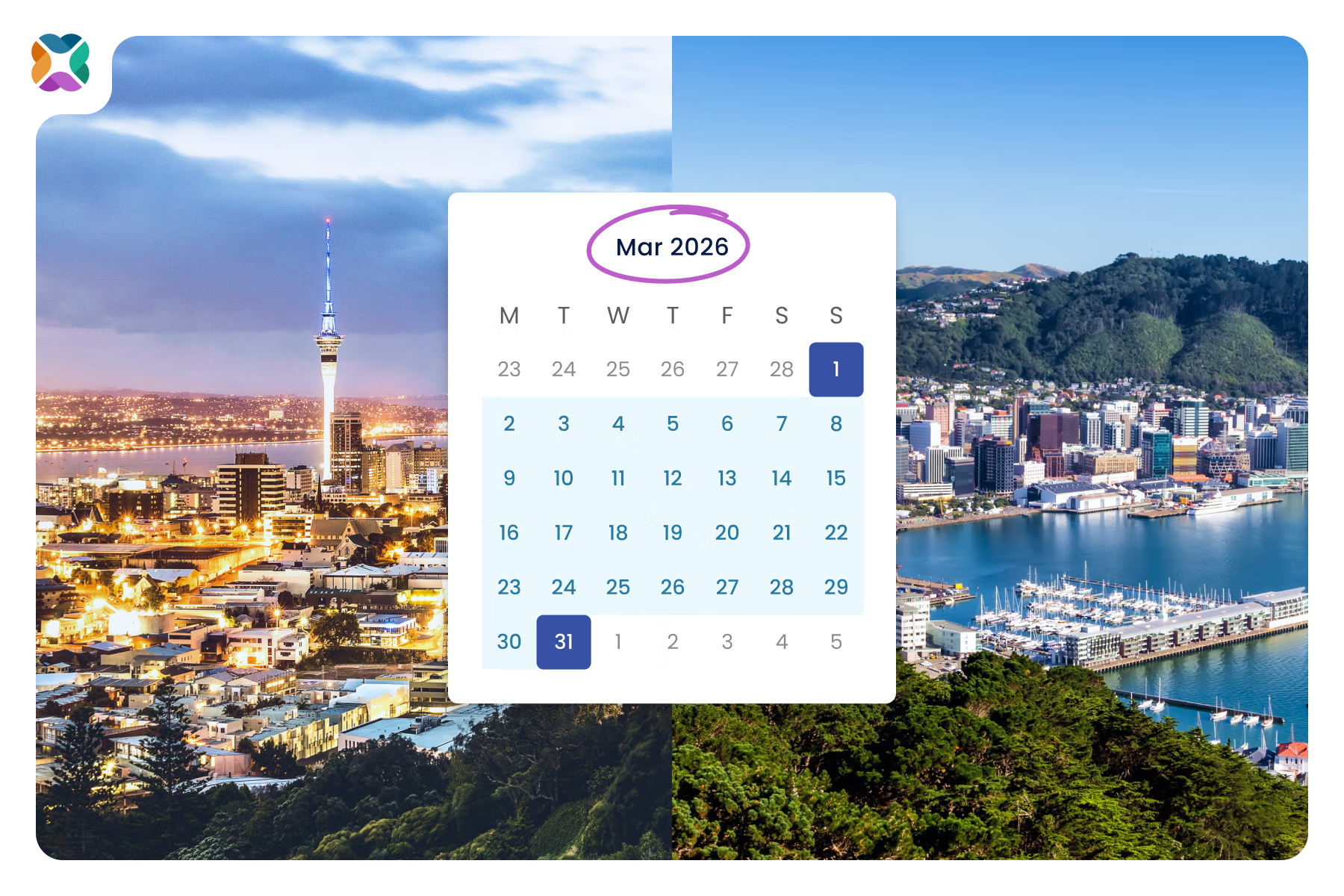
This year, Auckland Transport and Greater Wellington proactively prepared for higher demand. Auckland deployed larger buses on 37 routes, added eight school buses, and positioned “banker” buses at capacity hotspots. Planners also anticipated a surge in tertiary students following an increase in the student discount from 25% to 40%.
Then the world shifted.
The war in the Middle East triggered a sudden fuel price shock, sending public transport demand far beyond seasonal expectations. Auckland recorded its busiest week in seven years, with a 7% week-on-week increase. Wellington recorded its busiest month ever for bus partronage. These aren’t minor fluctuations; they reflect a structural shift in travel patterns, accelerated by external pressures.
So how did these networks cope, and what can cities worldwide learn?
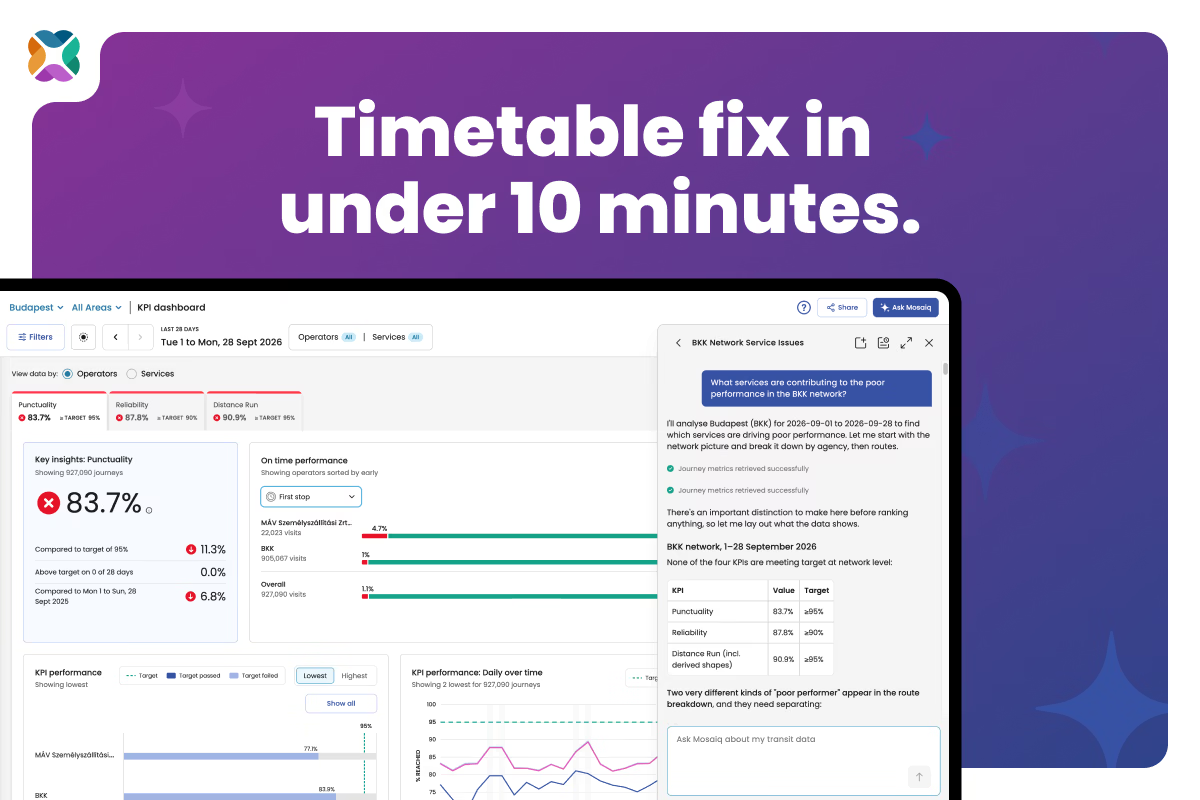
Based on Mosaiq Global Public Transit Index (GPTI) data at the end of March, Auckland ranked fifth out of 119 regions globally for first-stop performance. On-time performance across both regions remainswell above 90%, and early running is low, showing disciplined operational management.
Looking deeper, March punctuality matched or slightly exceeded February’s, and Auckland even reduced cancellations by roughly 400 compared to the previous month. This demonstrates that with strong fundamentals, such as capacity investment, careful planning, and operational execution, public transport networks can absorb sudden demand shocks without compromising service quality.
For global operators, authorities and city planners, this is a meaningful lesson. While the example comes from New Zealand, the principles are universal: deliberate investment, scenario planning, and operational discipline are what make public transport resilient. And with growing electric fleets and robust infrastructure, these networks are now well-positioned to handle future demand surges, regardless of whether they come from policy changes, pricing shifts, or external crises.
This example shows that with the right preparation, public transport can not only survive demand shocks – it can thrive.