This gap between planning and execution isn't a new problem. But it's one the industry has been surprisingly slow to close.
For time-poor operators and authorities, that's what makes the partnership between Snapper Services and Optibus worth paying attention to.
An untapped cycle of continuous improvement
Optibus is responsible for planning and scheduling some of the world’s most complex transit networks. Snapper's Mosaiq Transit Intelligence Suite captures what actually happens once those plans are executed – capturing real-time operational data at scale and creating a historical record of performance.
Separately, both platforms are powerful. But together, they create something that helps the many operators and authorities in the industry who are flying blind: a continuous, data-driven loop between what is planned and how it performed.
The cycle works like this:
- Optibus designs efficient, optimised routes and schedules.
- Mosaiq captures every trip, every pattern across time.
- That performance data then flows back into planning, enabling planners to tighten schedules, improve resource allocation, and build networks that only improve over time.
Instead of rushing to fix one-off issues in your network, you have a strategic advantage that only compounds over time.
A connected ecosystem across the UK
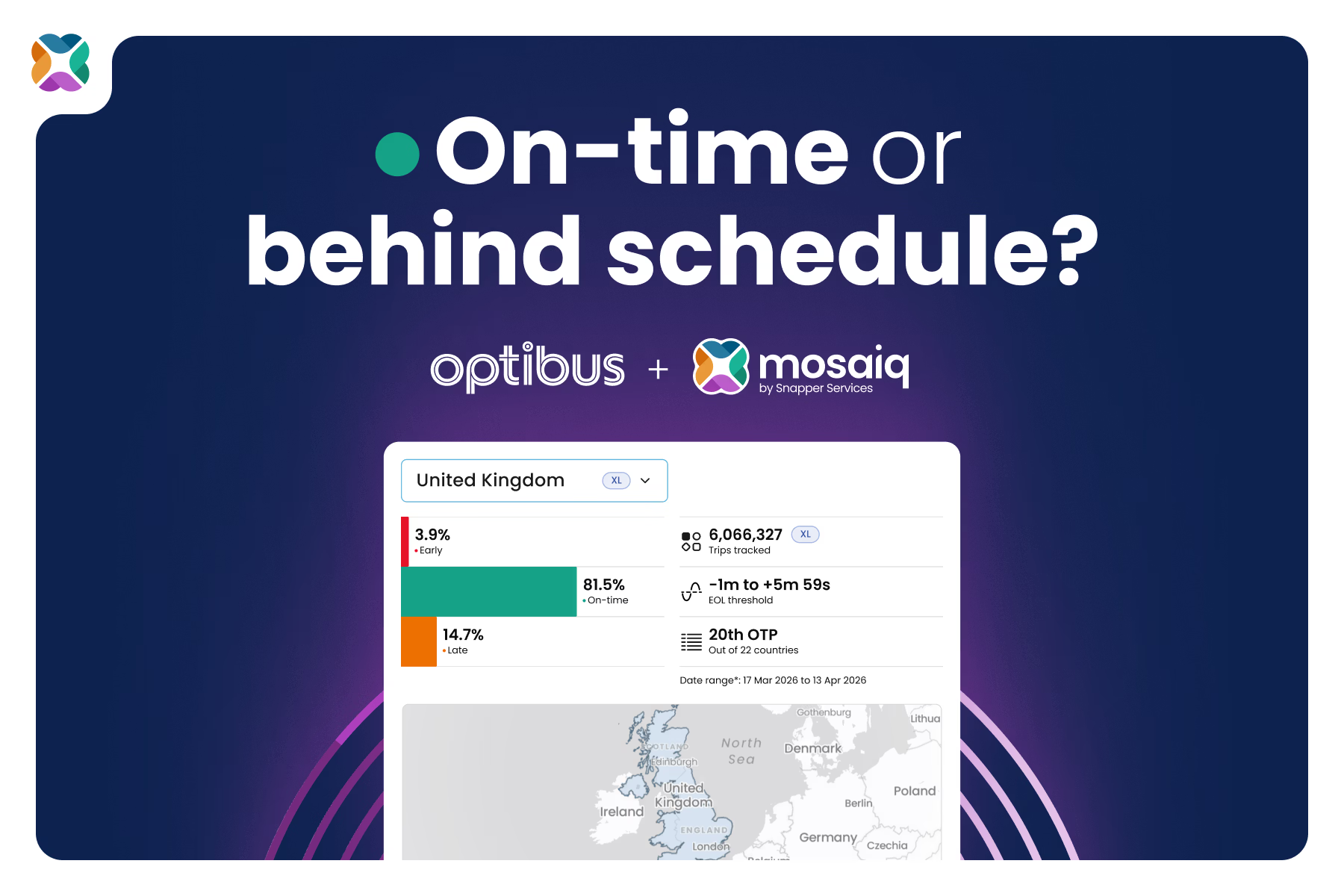
Using data powered by the Mosaiq Global Public Transit Index (GPTI), when looking at the United Kingdom, a clear pattern emerges.
There is a 100% overlap between the top 10 cities for on-time performance in the Mosaiq GPTI and locations actively using Optibus. Every location where Mosaiq tracks historical trip data is also a city where Optibus is used to plan routes and schedules.
Proof in practice: when planning depth drives results
Some UK locations demonstrate just how impactful this connection between planning and monitoring can be.
Take Bolton and Sheffield:
- Both cities are highly visible in Mosaiq
- Bolton: 66,623 trips captured
- Sheffield: 78,954 trips captured
- Both cities have an extensive Optibus planning footprint
- Bolton: 1,518 stops
- Sheffield: 1,390 stops
- Both achieve on-time performance above 90%
On-time performance sitting above 90% is a significant achievement. In an industry where delays erode passenger trust and inflate operating costs, this
reliability is what drives sustained ridership.
A dense, well-optimised planning network enables:
- More granular, accurate schedules
- Better resource allocation
- Greater resilience to disruptions
Mosaiq then validates these executed plans by:
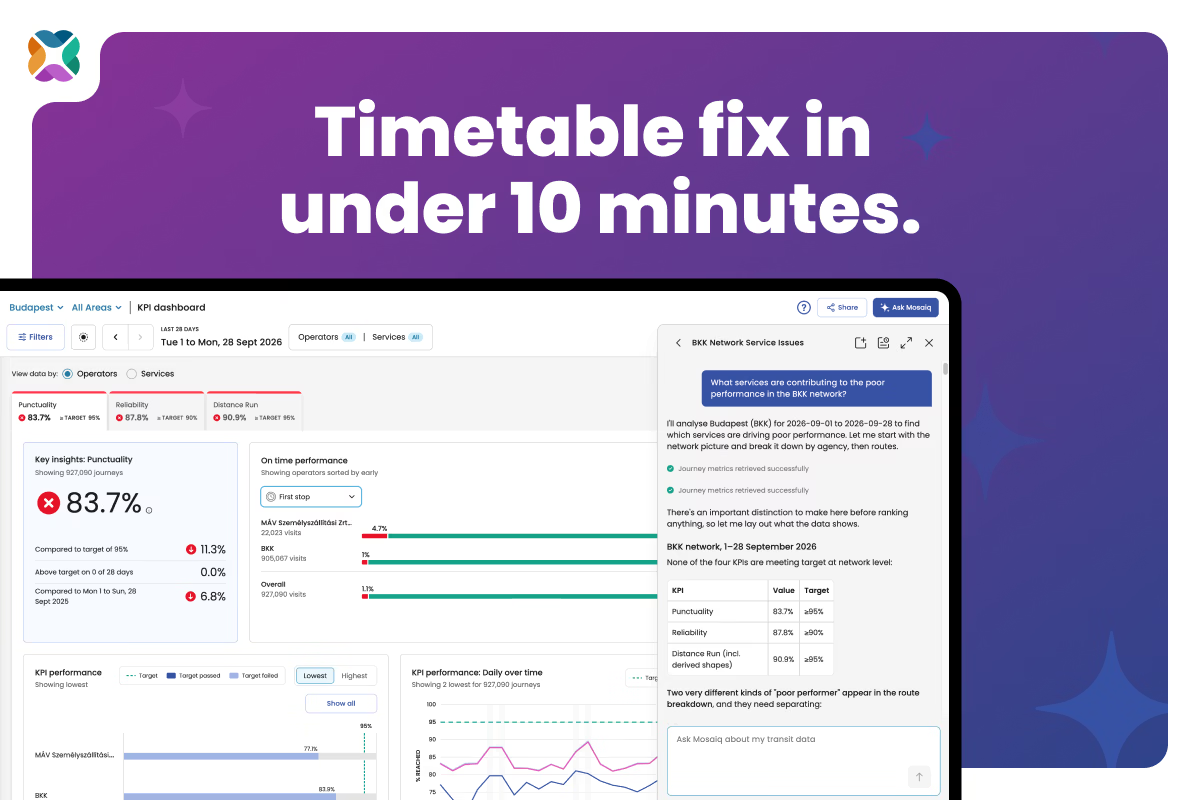
- collecting, processing, and showing all operational data to show how services perform over time
- building a single source of truth for key performance indicators like punctuality and reliability
- surfacing actionable insights for confident network improvements
Locations like Bolton and Sheffield aren't just performing well for no reason. These cities demonstrate what is possible when planning and execution are tightly connected through a continuous feedback loop.
Growth opportunities: high demand, low planning depth
The data also highlights where the next efficiency gains can be made. Bournemouth and Reading stand out as high-demand networks with relatively limited planning depth:
- Bournemouth
- 64,877 trips captured in Mosaiq
- 33 Optibus stops
- Reading
- 7,846 trips captured in Mosaiq
- 43 stops
These locations are already operating at scale, but with a lighter planning footprint compared to top-performing areas. In other words, they don’t have the full benefit of deep planning and monitoring integration.
This presents a clear opportunity. Expanding planning coverage in Optibus can help better align schedules with real-world demand, reduce variability and improve on-time performance. These locations represent the next frontier for unlocking the full value of a connected planning and performance ecosystem.
The core insight: better together
Across all the data, one pattern stands out: locations with deeper planning coverage tend to achieve stronger real-world performance.
Or more simply, better planning leads to better execution.
- Bolton and Sheffield show what success looks like today
- Bournemouth and Reading highlight where improvements could happen next
The partnership between Snapper Services and Optibus turns this insight into action by creating a continuous cycle:
- Plan intelligently
- Capture real-world operations
- Analyse performance historically
- Optimise continuously
Shaping the future of public transport
The future of public transport is not just about smarter tools. It is about connected systems.
By bringing together planning and execution, Optibus’ Performance Suite and Snapper’s Mosaiq help operators and authorities move beyond static schedules and reactive fixes, toward a model of continuous, data-driven optimisation grounded in real operational outcomes. Because in modern transit, success does not come from planning or monitoring alone. It comes from being better together.