When a major event hits the city – whether a busy shopping weekend in the leadup to Christmas, a sports match, or unexpected roadworks – public transport networks can quickly feel the strain. Delays, congestion, and disruptions ripple across routes, affecting punctuality and passenger experience. For authorities and operators, the challenge is understanding exactly where and how performance is impacted so they can make informed decisions.
Mosaiq provides that clarity. By visualising your network, analysing stop- and route-level KPIs, and comparing performance across periods, Mosaiq helps authorities and operators pinpoint problem areas, understand the scale of impact, and track how interventions affect performance over time.
Measuring real-world impacts: Black Friday at Sylvia Park Mall, Auckland
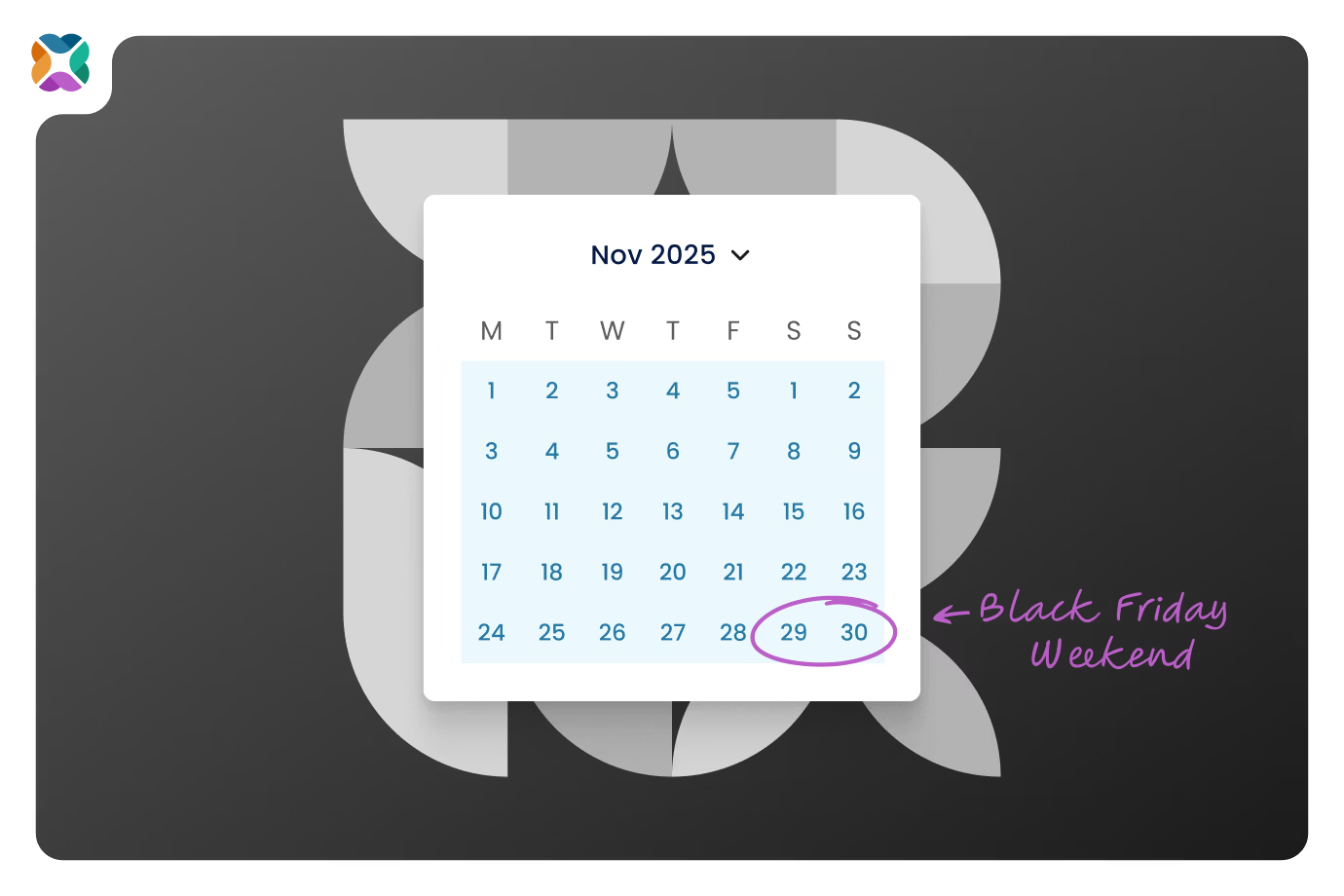
High-traffic events can significantly affect public transport. Take Sylvia Park Mall, one of Auckland’s busiest shopping destinations. During Black Friday weekend (28–30 November 2025), a surge of shoppers created congestion that impacted multiple routes in the area.
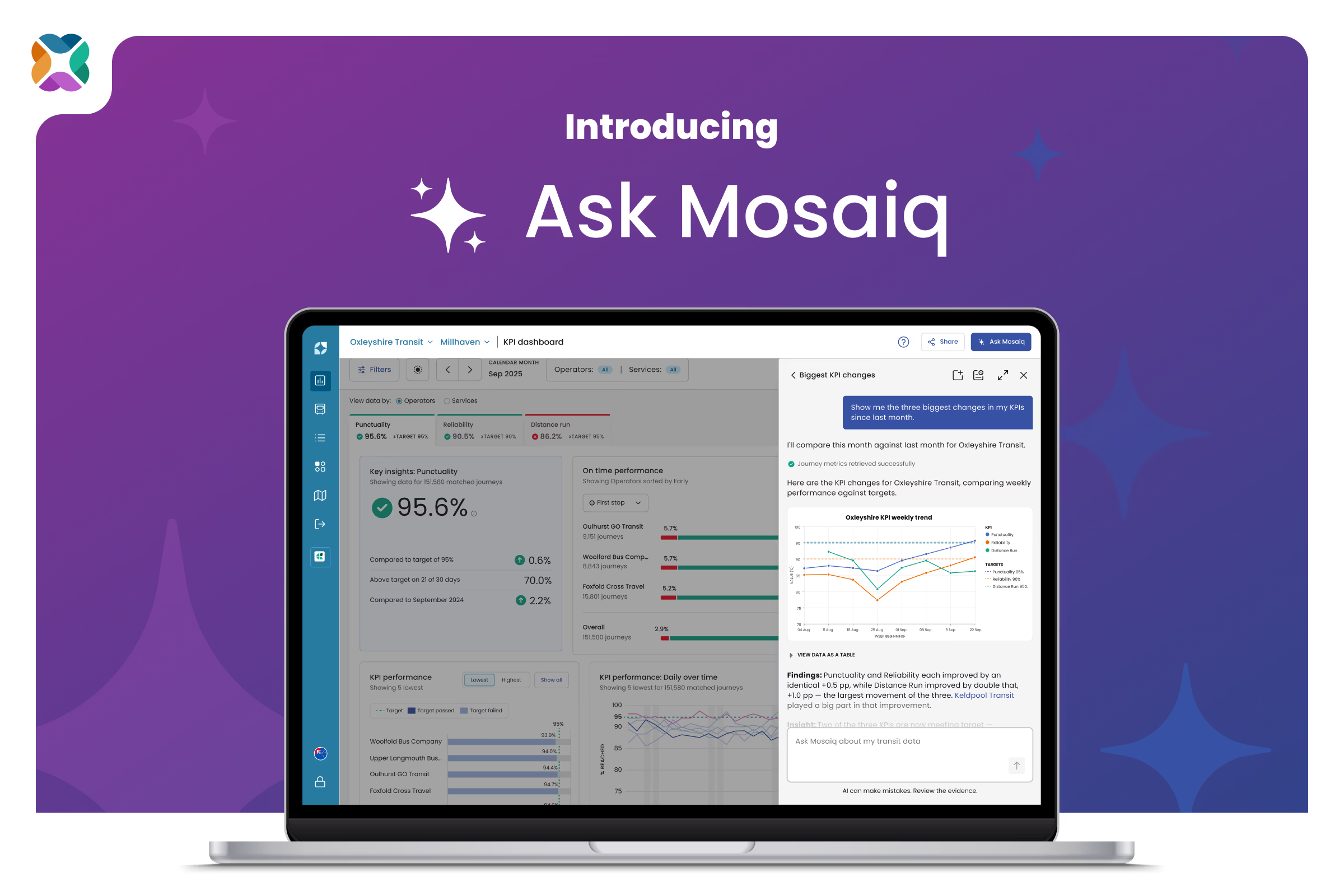
Using Mosaiq’s Network Map and Services List, we compared performance during this weekend to typical November weekends. The analysis revealed clear patterns in punctuality and journey times, illustrating how external events ripple through the network.
Key insights
During Black Friday weekend, stop-level lateness around Sylvia Park doubled compared to a typical November weekend, and punctuality KPIs dropped by an average of 3.6%, with some routes – such as Route 298 (Sylvia Park ↔ Onehunga) – experiencing declines of up to 7%. At the same time, the proportion of journeys exceeding scheduled running times increased by 31%, clearly highlighting congestion hotspots across the network.
These patterns demonstrate where performance pressures were greatest and show how high-demand events can ripple through multiple routes. With Mosaiq, authorities and operators can explore these trends in detail, identify which stops and routes were most affected, and track how interventions influence reliability over time.
Turning insights into action
Mosaiq makes it easy to visualise your network, compare performance across periods, and drill into route- and stop-level metrics. Transit professionals can quickly identify hotspots, track KPI changes, and assess the potential impact of operational adjustments.
For example, analysis of Route 298 revealed significant delays during Black Friday, offering insights that could inform scheduling adjustments, temporary resource allocation, or traffic management measures for future high-demand events. By providing data-driven clarity, Mosaiq helps authorities and operators make smarter decisions without guesswork.
Planning and optimising for the future
Mosaiq doesn’t just report past performance – it supports proactive planning. Authorities and operators can anticipate the effects of strikes, sporting events, or busy shopping weekends and evaluate the impact of infrastructure changes such as new bus lanes, timing points, or roadworks.
By identifying trends, pinpointing congestion hotspots, and measuring the impact of interventions, Mosaiq empowers authorities and operators to optimise network performance and improve passenger experience, turning complex data into actionable intelligence.
Why Mosaiq’s insights matter
Public transport networks are dynamic, and even small disruptions can ripple across multiple routes. With Mosaiq, authorities and operators gain the clarity and confidence to act. They can understand how events and operational changes affect performance, identify areas for intervention, and measure whether adjustments deliver results.
Whether managing a busy weekend, planning around infrastructure projects, or evaluating operational improvements, Mosaiq provides the intelligence needed to deliver reliable, efficient, and passenger-focused services.